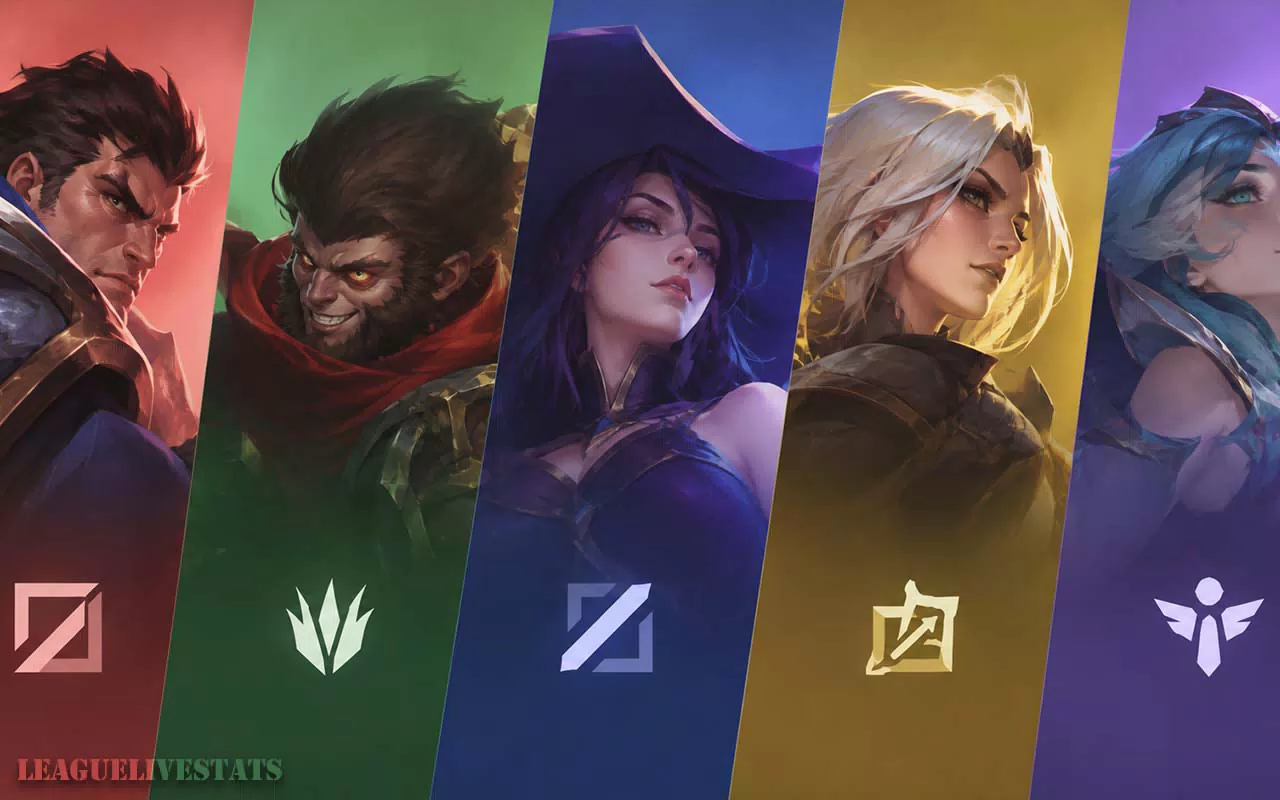
New players usually learn the five roles in League of Legends as five spots on the map — top, jungle, mid, bot, and support — long before they understand what any of those roles are actually supposed to be doing during a game. Knowing where to stand is the easy part. Knowing what your job is once you get there, and how that job changes as the game goes on, takes a lot longer to click.
Top Lane: The Isolated Duelist
Top lane is functionally its own separate game for most of the early stages of a match. Cut off from the rest of the map by distance and terrain, top laners spend the laning phase largely on their own, focused on winning or surviving an extended one-on-one matchup while the jungler's attention is usually elsewhere. This isolation is why top lane tends to attract champions built around dueling — bruisers, tanks, and split-pushers who scale well into extended one-on-one fights and who can function even when cut off from teammates for long stretches.
As the game progresses, top lane's job shifts from winning lane to applying pressure elsewhere on the map. A strong top laner who can survive or beat their matchup often becomes a threat that forces the enemy team to send extra people to deal with them, which indirectly creates space for the rest of the map even if the top laner never shows up to a team fight.
Jungle: The Map's Tempo Controller
The jungler is the only role that doesn't have a fixed lane, and that flexibility is the entire point of the role. Jungle is responsible for clearing neutral monster camps for gold and experience, but more importantly, for deciding where and when to apply pressure across the whole map — ganking a lane that's ahead, invading an enemy jungler who's behind, or setting up around an objective before it spawns.
Because the jungler touches every part of the map, this role carries an outsized amount of responsibility for pacing an entire game. A jungler who ganks effectively can turn an even lane into a winning one, and a jungler who tracks the enemy jungler's pathing can prevent counter-ganks and invades before they happen. It's a role built around decision-making under uncertainty, since a jungler almost never has full information about where the other four enemy champions actually are.
Mid Lane: The Flexible Playmaker
Mid lane sits at the center of the map, within reach of both jungles and close enough to rotate to either side lane or to help contest the river. That central position is why mid laners are usually expected to be more mobile and more involved in the rest of the map than top laners, roaming to help a losing lane or collapsing on a fight that's happening elsewhere.
Mid lane also tends to attract champions with strong single-target burst or wave-clear, since the role frequently needs to either win a fast one-on-one before rotating, or clear a wave quickly enough to leave lane and make a play elsewhere without losing significant gold or experience in the process.
Bot Lane ADC: The Late-Game Damage Engine
The marksman role, more commonly called ADC, is built around a simple tradeoff: extremely weak in the early game relative to almost every other role, but capable of dealing the highest sustained damage in the game once items and levels come online. This is why ADCs are so dependent on surviving the laning phase safely rather than winning it outright — the goal early on is usually just to reach the late game with enough gold and experience to become the primary damage source in every team fight from that point forward.
Because of this fragility-into-power curve, ADC is the role most dependent on positioning. A marksman that gets caught out of position in a team fight often dies without dealing any damage at all, which is why so much of playing the role well is about staying at maximum safe range rather than about pure mechanical execution.
Support: The Enabler
Support is the role built almost entirely around making everyone else's job easier rather than accumulating individual resources. Vision control, peeling for carries in fights, setting up kills in lane, and sacrificing personal gold so the ADC can scale faster are all part of the role's core responsibility, which is why support champions vary so widely — from pure healers and shielders to aggressive engage supports whose entire job is starting fights on the enemy's carries.
Because supports often have the least personal gold of any role, their impact tends to come from utility and timing rather than raw stats, which makes decision-making and map awareness disproportionately important compared to mechanical skill with any single champion.
The Bottom Line
Each role exists to solve a different problem the game presents: top lane solves isolation, jungle solves map-wide tempo, mid lane solves flexibility, ADC solves sustained damage output, and support solves enabling the rest of the team. Understanding what problem a role is meant to solve, rather than just memorizing where it stands on the map, makes it far easier to understand why certain champions get picked for certain roles — and why a champion that excels in one role can be nearly unplayable in another.
For a full breakdown of role-specific mechanics and champion recommendations, Riot Games' official role guide is a useful reference to check.