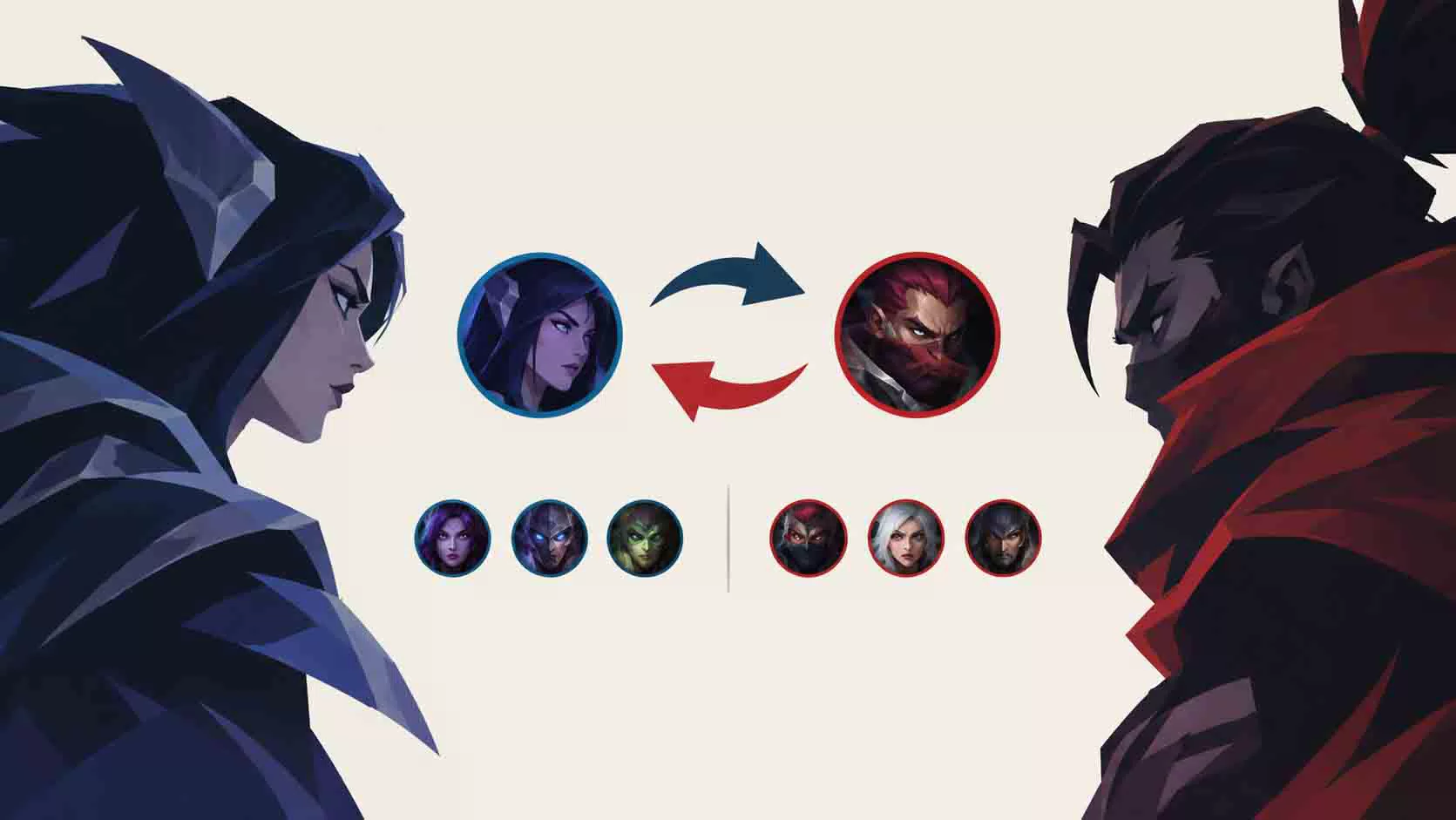
Few topics generate as much confident, repetitive advice in League of Legends as counter-picking. Players will tell you a champion is a hard counter to another, as though matchups worked like a simple rock-paper-scissors table where the right pick wins automatically. The reality is far messier, and understanding why a matchup is favorable or unfavorable matters a lot more than memorizing a list of which champion beats which.
What a Counter Actually Means
A counter-pick isn't a guaranteed win, it's a champion whose kit makes the opponent's strengths less effective or their weaknesses easier to exploit. A champion with a long-range poke ability against one who has to walk up to fight is the classic example: the poke champion can chip away at the enemy's health bar without ever being threatened, and the melee champion has to either take that damage or retreat from the wave and lose farm.
But the effect is rarely absolute. A matchup that favors one champion by a small margin can be completely overturned by a player who understands the other side better, and the opposite is just as true. Counters change the odds, but they don't change the fact that two players still have to execute, and a player who knows how to play around a bad matchup will often beat a player who relies on the counter to do the work for them.
Why Matchups Feel Different at Different Stages
A matchup that's brutal at level one can become completely even by level six, and an even matchup early can become heavily one-sided once one champion gets a key item or ultimate. This is why experienced players think about matchups in phases rather than as a single verdict.
Some champions are strong in the first few levels and fall off quickly, which means the matchup is mostly about whether the weaker early champion can survive until their power spike arrives. Others are weak early but scale into near-unstoppable late-game threats, which means the matchup is mostly about whether the stronger early champion can use their advantage to build a lead before the late game arrives. Thinking about which phase of the game a matchup favors, and planning around it, is more useful than knowing who wins in a vacuum.
Playing a Bad Matchup Without Falling Apart
The biggest mistake in an unfavorable matchup is trying to fight it on the enemy's terms. A player facing a champion who wins every extended trade and keeps trying to trade anyway is just feeding the enemy's advantage with every exchange.
The better approach is usually to minimize losses rather than force wins. That means farming safely under the tower, avoiding unnecessary trades, and focusing on reaching your next power spike with as little damage taken as possible. It also means paying closer attention to the wave state, since a well-managed wave can neutralize a lot of the enemy's advantage, and relying on your jungler's help rather than trying to win the lane alone.
A bad matchup is often temporary. A player who survives the early phase without giving up kills or significant farm frequently finds the matchup shifts back to even as levels and items come online.
Blind Picks vs. Counter Picks
The order of champion select matters as much as the pick itself. A blind pick, made before the enemy reveals their choice, needs to be a champion that doesn't have many hard counters, since the player has no way of adjusting to what comes next. A counter-pick, made after seeing the enemy's choice, can be much more specialized because the matchup is already known.
This is why flexible champions with few bad matchups tend to be popular as first picks, and why highly specialized champions that are strong into specific opponents but weak elsewhere tend to be saved for later in champion select. Understanding where a champion sits on that spectrum helps avoid getting locked into a matchup you can't play around.
Team-Wide Counters, Not Just Lane Counters
Counter-picking isn't limited to the lane. A team can counter another team's overall strategy as much as an individual champion can counter another champion. A team built around healing and sustained damage counters a team with heavy poke and low sustain, for example, and a team with strong engage tools counters a team that relies on kiting and staying at range.
Recognizing these broader counters during champion select, and building around them rather than only thinking about your own lane, is part of what separates drafts that look coordinated from ones that look like five separate decisions.
The Bottom Line
Counter-picking is a useful tool, but it's not a substitute for understanding a champion. A good counter-pick gives you a slight edge, a bad matchup gives your opponent a slight edge, and in both cases the outcome depends far more on how well each player understands the situation than on the matchup alone. Learning why a matchup is favorable or unfavorable, and how it changes across different stages of the game, will always be more valuable than memorizing a list.
For detailed champion ability information to understand matchups better, Riot Games' official champion page and the League of Legends Wiki's champion list are both useful references to check.