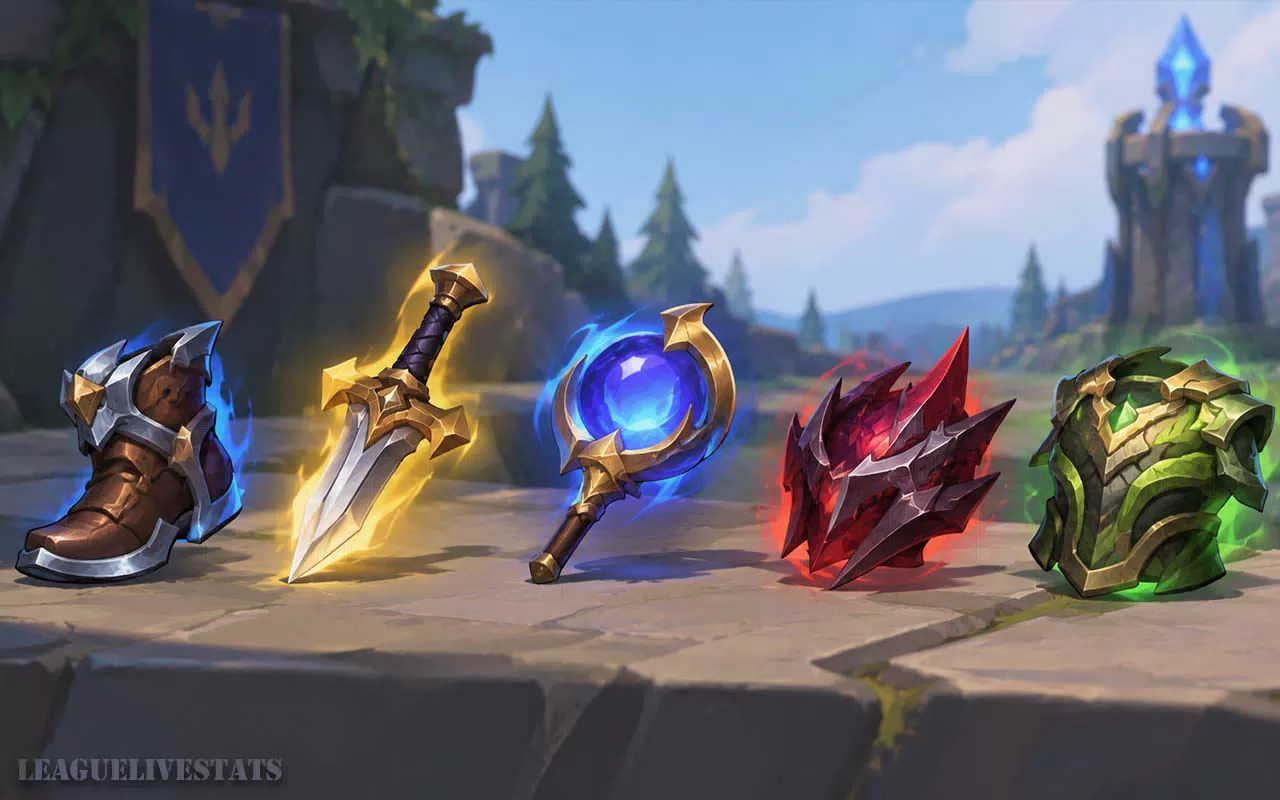
New players often treat item builds as something to memorize — a fixed list to buy in order every single game, regardless of how the match is actually going. Experienced players treat the same shop very differently: as a set of tools to solve whatever problem the current game is presenting, adjusted match by match based on who's ahead, who's fed on the enemy team, and what's actually killing them in fights. The gap between those two approaches is one of the biggest, least-discussed jumps in skill in the entire game.
Core Items vs. Situational Items
Most champions have what's usually called a core build — a small set of items, typically two or three, that define how the champion functions and that get bought in close to every game regardless of the matchup. These items usually enable a champion's core identity, whether that's burst damage, sustained damage, tankiness, or utility, and skipping them entirely usually means the champion simply doesn't do its job properly in a fight.
Beyond the core build, every remaining item slot should be treated as situational rather than fixed. This is the part of itemization that separates strong players from average ones: recognizing when the enemy team has stacked healing and buying an item that reduces it, recognizing when a single enemy carry is dealing all the damage and building specifically to survive or shut down that one champion, or recognizing when the enemy team has gone all-in on magic damage and adjusting resistances accordingly.
Reading the Enemy Team, Not Just Your Own Champion
A common mistake at lower skill levels is building an item path purely based on what feels good to play, without ever looking at what the enemy team is actually doing. If the enemy jungler and mid laner are both fed and dealing enormous magic damage, building magic resistance earlier than usual isn't a compromise on damage output, it's what actually keeps a champion alive long enough to deal any damage in the first place.
This kind of reactive building requires actually checking the enemy team's items during a match, not just remembering their champion select picks. A champion who looked purely physical at the start of the game can end up building substantial magic damage by the late game, and a build that ignores that shift because it was planned before the match started will consistently underperform regardless of individual mechanical skill.
Damage Type Matters More Than Total Stats
One of the most common itemization mistakes is focusing purely on offensive stats without considering what kind of damage a build actually deals, and whether the enemy team is itemized to resist it. Stacking pure damage into a team that's already building the correct resistances against that damage type produces diminishing returns, while diversifying damage type, or building around penetration items that ignore a portion of resistances, is often the more effective path once an enemy team has adjusted their own itemization.
This is also why buying defensive items isn't purely a defensive decision. An item that keeps a carry alive for two extra seconds in a fight often results in far more total damage dealt over the course of that fight than a pure damage item would have, simply because a dead champion deals zero damage for the rest of the fight regardless of how much damage their build was capable of.
Spike Timings and Item Order
The order items get purchased in matters almost as much as which items eventually get bought, because most champions have specific power spikes tied to completing a particular item or reaching a particular level. Rushing the item that completes a champion's core power spike, rather than building slightly toward several items at once, is usually correct when a champion has a fight or an objective coming up that lines up with that spike.
This is part of why watching the in-game clock and thinking ahead to the next objective matters for itemization specifically, not just for positioning. Knowing that a dragon or Baron fight is likely in the next few minutes should influence whether a build prioritizes finishing a damage spike immediately or building more defensively to survive that specific fight.
The Bottom Line
Good itemization isn't about memorizing a single optimal build for a champion, since no such thing really exists independent of the game being played. It's about understanding a champion's core identity well enough to know which one or two items are close to mandatory, and then reading the actual state of the match — who's fed, what damage type is threatening, and what fight or objective is coming next — to fill in the rest. That habit of checking the enemy team's build before every back, rather than defaulting to a memorized list, is one of the simplest and most underrated ways to improve at the game.
For up-to-date item stats and build paths, Riot Games' official item page and the League of Legends Wiki's item list are both useful references to check.