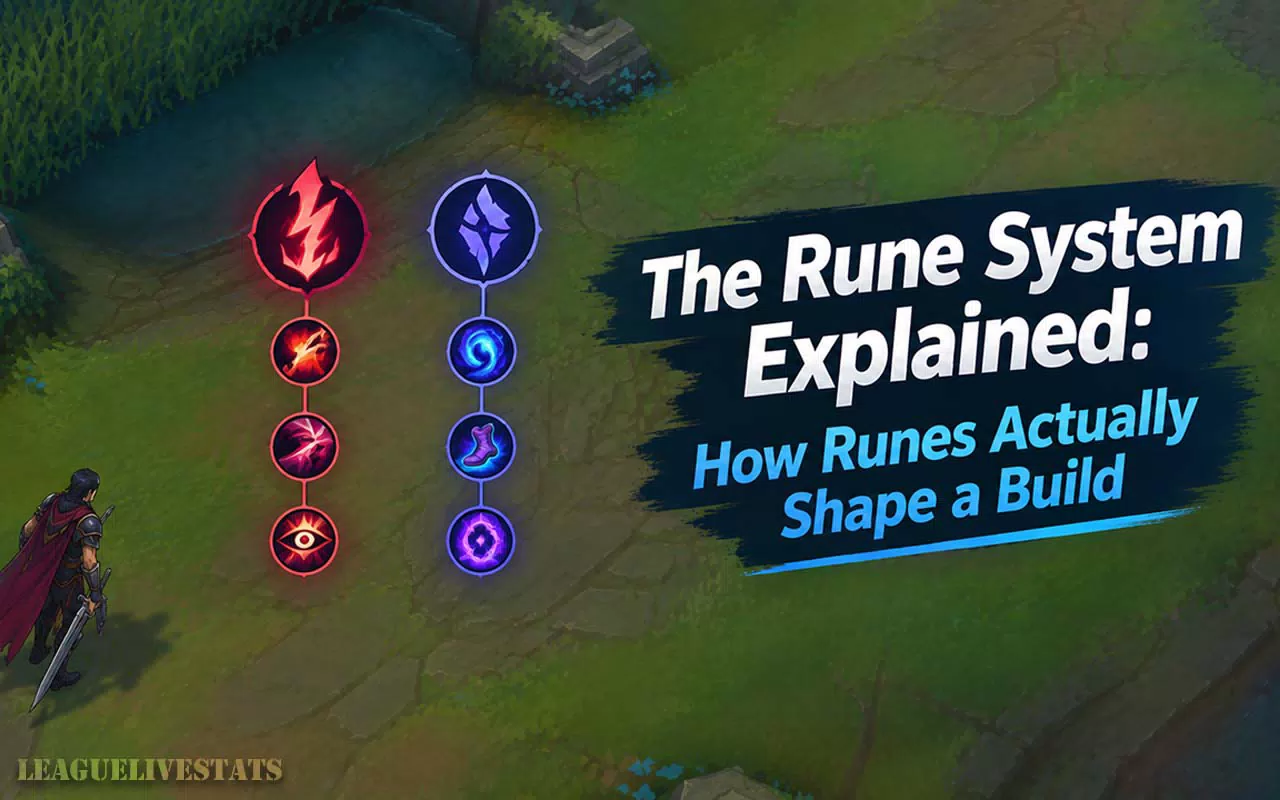
Runes get set once before a match even loads and then mostly disappear from a player's attention for the rest of the game, which is probably why so many players default to whatever page shows up first in the client rather than thinking about what a specific matchup or game plan actually calls for. That's a shame, because the rune page is doing quiet work throughout the entire match, and picking the wrong one can leave a champion feeling weaker for reasons that have nothing to do with mechanics or item builds.
Keystones: The Big Decision at the Top of the Page
Every rune page starts with a keystone choice, and this is by far the highest-impact decision in the entire system. A keystone is a single powerful effect that activates under specific conditions — landing a combo of abilities on an enemy, sustaining damage over time in a fight, or simply dealing consistent poke over a longer trade — and it usually defines the entire identity of how a champion is meant to play out a fight, not just how much damage they do.
Two champions with an identical kit can play completely differently depending on their keystone. A burst-oriented keystone rewards landing every part of a combo in a short window and punishes being interrupted mid-combo, while a sustained-damage keystone rewards staying in extended fights and punishes disengaging early. Choosing a keystone isn't really about which one deals more total damage on paper, it's about which playstyle actually matches how a champion wants to fight and how a specific matchup is likely to play out.
Primary and Secondary Paths: Filling In the Details
Below the keystone, every rune page pulls from a primary path and a smaller secondary path, each themed around a different overall strategy — some paths lean into raw damage and aggression, others into survivability and sustain, others into utility and mobility. The remaining runes within these paths are smaller individually than a keystone, but they add up to a meaningful difference in how a champion performs across an entire game, particularly in the early levels before items start to matter as much.
The secondary path in particular is where a lot of players default to habit rather than thinking about the actual game plan. Taking a defensive secondary path against a lane matchup that's mostly about all-in burst trades, rather than one that rewards sustained damage or extended fighting, is a common mismatch that quietly costs value every single game without ever being obvious in the moment.
Matching Runes to the Matchup, Not Just the Champion
The biggest mistake in rune selection isn't picking a bad keystone in isolation, it's picking a fixed page for a champion and using it in every matchup regardless of what the opponent is actually playing. A keystone built around sustained trading is far less valuable against an opponent who can burst down a target in a single short window than it would be against an opponent who wants to fight for several seconds at a time, even though it's the exact same champion on both sides of that comparison.
This is why strong players tend to have two or three rune pages saved for a single champion rather than one fixed setup, switching between them based on who's actually on the other side of the lane. It takes very little extra effort compared to the value it adds, since the alternative — running the same page regardless of matchup — leaves real performance on the table in a way that's easy to fix once it's actually noticed.
Minor Runes and the Stat Shards
At the very bottom of the page sit a handful of small stat choices, often overlooked entirely because they look minor compared to everything above them. These usually offer a choice between things like attack speed, adaptive damage, extra health, or scaling resistances, and while any individual choice here is small, picking ones that suit the actual game plan — extra resistances against a lane that deals a specific damage type, for instance, or attack speed for a champion that scales heavily off of it — adds up over the course of a full match in the same way the secondary path does.
Runes Aren't Set-and-Forget
Because the rune page gets selected before the game starts and never gets touched again mid-match, it's tempting to treat the decision as low-stakes compared to itemization choices made throughout the game. In practice, a mismatched rune page is a disadvantage that persists for the entire match with no opportunity to correct it later, which arguably makes it a more important decision to get right than any single item purchase, since a bad item can at least be sold or adjusted around as the game goes on.
The Bottom Line
Runes aren't a cosmetic layer on top of a champion's kit, they're a real decision about how a champion is meant to fight, and that decision should change based on the matchup rather than staying fixed by habit. Understanding what a keystone is actually rewarding, choosing a secondary path that matches the expected pace of a lane, and being willing to swap pages between games rather than defaulting to the same setup every time are all small habits that add up to a real, consistent improvement in how a champion performs.
For current rune details and full path breakdowns, Riot Games' official rune page and the League of Legends Wiki's rune page are both useful references to check.