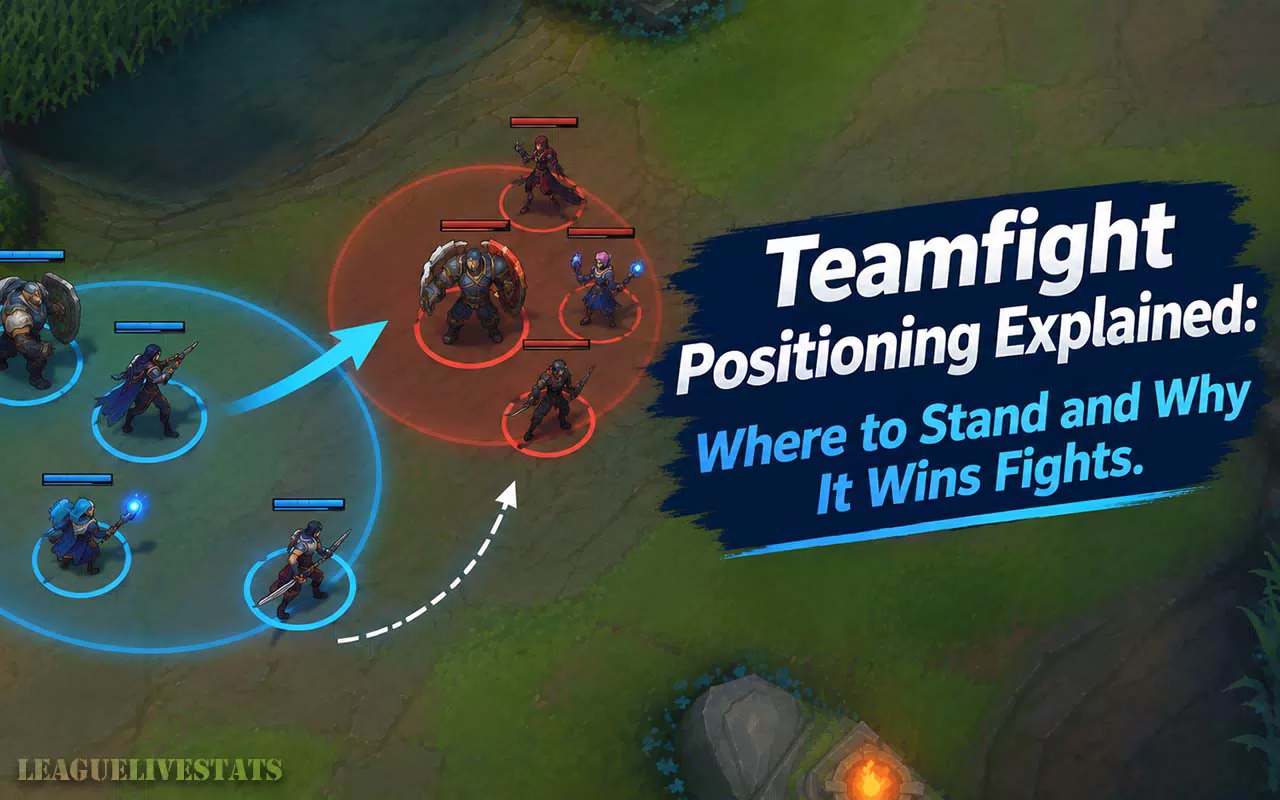
Watch any high-level team fight back in slow motion and the thing that stands out isn't usually a flashy mechanical outplay, it's how consistently every player is standing exactly where their champion needs to be the moment the fight actually starts. Positioning doesn't show up on a scoreboard and it rarely gets replayed in highlight clips, but it's arguably the single biggest factor separating fights that get won cleanly from fights that fall apart in three seconds.
Frontline: Absorbing the Fight So Others Don't Have To
Tanks and frontline fighters exist to be the first thing the enemy team has to deal with, and their positioning job is to physically stand between the enemy team and their own team's carries. A frontliner who hangs back near their own backline isn't protecting anyone, they're just failing to do the one job their kit is built around. Good frontline positioning means walking in first, absorbing crowd control and damage that would otherwise land on a carry, and creating enough of a wall that the enemy has to either commit resources to break through or give up on reaching the real damage dealers behind it.
This is also why frontline champions are usually expected to initiate fights rather than wait for one to start around them. A team fight that starts with the frontline engaging on their own terms, at a moment and location they chose, is enormously more winnable than one that starts because the enemy caught a carry out of position first.
Backline: Staying Alive Long Enough to Matter
Marksmen and other primary damage carries have the opposite job: staying as far away from the fight's front edge as possible while still being in range to deal damage, for as long as the fight lasts. This sounds simple in theory and turns out to be one of the hardest things to do consistently under pressure, since backline positioning requires constantly adjusting based on where enemies are trying to flank from, not just where the frontline of the fight currently is.
A carry standing at the absolute maximum safe distance the moment a fight starts often ends up out of position within a few seconds anyway, because enemy flankers and dive champions are specifically built to close that distance quickly. This is why backline positioning isn't a single decision made at the start of a fight, it's a continuous adjustment throughout the entire fight, constantly re-evaluating where the actual threats are coming from rather than assuming the initial safe spot stays safe.
Flanking: Turning the Fight From an Angle It Wasn't Built For
Assassins, divers, and flanking champions have a positioning job that looks almost the opposite of both other roles: staying out of sight until the fight is already underway, then appearing from an angle the enemy team didn't build their positioning around. A flank that lands cleanly on an enemy backline in the middle of a fight can end that fight almost instantly, since backline carries are usually positioned to survive frontal engages, not simultaneous pressure from two directions at once.
The tradeoff is that flanking is high risk by design — committing to a flank angle before a fight starts means being isolated from the rest of the team if that flank gets read or if the timing is off, which is why flank timing usually depends on the rest of the team engaging first, or at least being close enough to follow up immediately once the flank connects.
Peeling: Protecting the Carry Instead of Attacking
A specific and often underrated positioning job, usually falling to supports and some frontline champions, is peeling — actively using abilities, crowd control, or even just body-blocking to stop an enemy diver from reaching a carry, rather than trying to deal damage to the enemy team directly. Good peel positioning means staying close enough to a carry to react the instant a diver commits, without crowding that carry so much that it restricts their own movement and targeting.
Peeling is easy to underrate because it doesn't show up as damage dealt or kills secured, but a peel that buys even two or three extra seconds of a carry's life in a fight frequently translates into far more damage output than any single offensive play would have in that same window.
Reading the Fight as It Develops, Not Just at the Start
None of these positioning roles are static throughout a fight — a frontliner who's used all their engage tools may need to fall back and peel instead, a backline carry may need to reposition entirely if a flank connects on the other side of the fight, and a flanker who missed their initial engage window may need to fall back and wait for a second opportunity rather than forcing a bad one. Treating positioning as a single decision made at the start of a fight, rather than something to keep re-evaluating every second the fight continues, is one of the most common reasons otherwise well-started fights fall apart.
The Bottom Line
Positioning is less about any single champion's mechanics and more about understanding what job a role is supposed to be doing in a fight, and adjusting that positioning continuously as the fight actually develops. A frontliner who walks in first, a carry who keeps adjusting distance from real threats rather than an assumed safe spot, a flanker who waits for the right moment, and a support who peels rather than chases damage numbers are all doing the quiet, unglamorous work that decides far more fights than raw mechanical skill does on its own.
For more on team fight fundamentals and role-specific mechanics, Riot Games' official strategy guide is a useful reference to check.